
Uncategorized
Metal Laser Cutting Machine: Combatting Thermal Cutting Distortions
Introduction
In recent years, metal laser cutting machines have revolutionized the manufacturing industry by offering a more efficient, precise, and reliable method of cutting metals. However, one challenge that manufacturers often face when using these machines is the occurrence of thermal cutting distortions. This article aims to delve into the causes of thermal cutting distortions and explore the various strategies and technologies employed to combat them.
Understanding Thermal Cutting Distortions
Thermal cutting distortions typically occur when a metal component is subjected to the intense heat generated during the laser cutting process. This extreme heat causes localized expansion and subsequent contraction, resulting in various forms of deformation within the metal workpiece. Such distortions can significantly affect the dimensional accuracy, overall quality, and performance of the cut components. Therefore, it is imperative to address these distortions to ensure precise and reliable results in metal laser cutting.
Causes of Thermal Cutting Distortions
Several factors contribute to the occurrence of thermal cutting distortions. The following are the primary causes:
1. Heat Affected Zone (HAZ): The HAZ is the region of a metal workpiece that experiences significant temperature fluctuations during the laser cutting process. This zone is susceptible to metallurgical changes, including the formation of residual stresses, microstructural alterations, and distortion. The size and intensity of the HAZ depend on factors such as laser power, cutting speed, material properties, and thickness.
2. Material Properties: Different metals have unique thermal properties, such as thermal conductivity and specific heat capacity. These properties determine the energy absorption and dissipation during laser cutting, thereby influencing the extent of thermal distortions. For instance, materials with high thermal conductivity, such as aluminum, tend to distribute heat rapidly, minimizing distortions compared to materials like stainless steel.
3. Part Geometry: The shape, thickness, and complexity of the part being cut also play a role in thermal distortions. Sections that experience localized heat concentration, sharp corners, or thin regions are more susceptible to distortion due to inconsistent thermal expansion and contraction. Complex geometries may require additional strategies to minimize distortions and maintain the integrity of the cut parts.
Combatting Thermal Cutting Distortions
Manufacturers employ various strategies and technologies to combat thermal cutting distortions effectively. Here are some popular approaches:
1. Adaptive Laser Power Control: Laser cutting machines equipped with advanced control systems can intelligently adjust the laser power in real-time during the cutting process. By modulating the energy input based on real-time feedback, the machine mitigates thermal distortions and produces precise cuts.
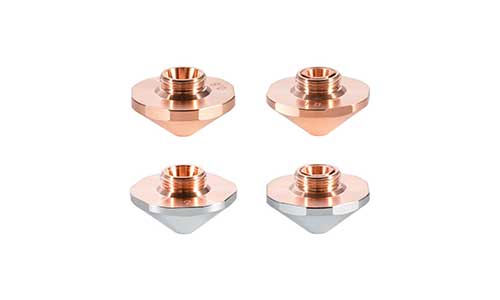
2. Heat Sink Solutions: Utilizing heat sinks, such as water-cooled nozzles or clamps, can help to dissipate excessive heat from the workpiece, thereby reducing distortions. These heat sink solutions absorb and transfer the heat away from the cut area, preventing localized overheating and minimizing thermal expansion.
3. Controlling Cutting Speed: Proper control of the cutting speed is crucial in minimizing thermal distortions. Adjusting the cutting speed allows for sufficient heat dissipation and provides the metal with more time to cool down, reducing the chances of deformation. Careful optimization of cutting parameters, including speed, leads to improved cutting quality and limited distortions.
4. Preheating and Post-weld Heat Treatment: In certain applications, preheating the workpiece before laser cutting can reduce the temperature differential between the HAZ and the unaffected regions, minimizing distortions. Similarly, applying post-weld heat treatment helps to relieve residual stresses and restore the original shape of the component.
FAQs (Frequently Asked Questions)
Q: Can thermal cutting distortions be completely eliminated?
A: While it is challenging to completely eliminate thermal distortions, employing the appropriate strategies and technologies significantly minimizes their impact.
Q: Does the type of laser affect thermal distortions?
A: Yes, different types of lasers, such as CO2 lasers or fiber lasers, produce varying amounts of heat during cutting. Choosing the most suitable laser for the specific application can help minimize thermal distortions.
Q: Are there any industry standards to address thermal distortions?
A: Several industry standards, such as ISO 9013, address the classification of thermal cutting distortions and provide guidelines for acceptable distortions based on different quality levels.
Q: Can post-cutting techniques correct thermal distortions?
A: In cases where dimensional accuracy is crucial, post-cutting techniques such as machining or grinding can be employed to correct any remaining distortions.
Conclusion
Metal laser cutting machines have brought about significant improvements in the manufacturing industry. However, thermal cutting distortions remain a challenge that manufacturers must address. Understanding the causes of these distortions and implementing various strategies, such as adaptive laser power control, heat sink solutions, controlling cutting speed, and heat treatment, can help combat and minimize the impact of thermal cutting distortions. With continuous advancements in laser cutting technology and process control, the industry is moving towards even more precise and distortion-free metal cutting.
[ad_2]